

Recently, German artificial intelligence and automation robotics company NEURA Robotics (website: neura-robotics.com) announced the completion of a massive $1.4 billion Series C funding round. This round sets a new record for the largest single funding round in the global robotics industry by 2026, valuing the company at $7 billion post-money and propelling it into the ranks of the world’s leading humanoid robot manufacturers.
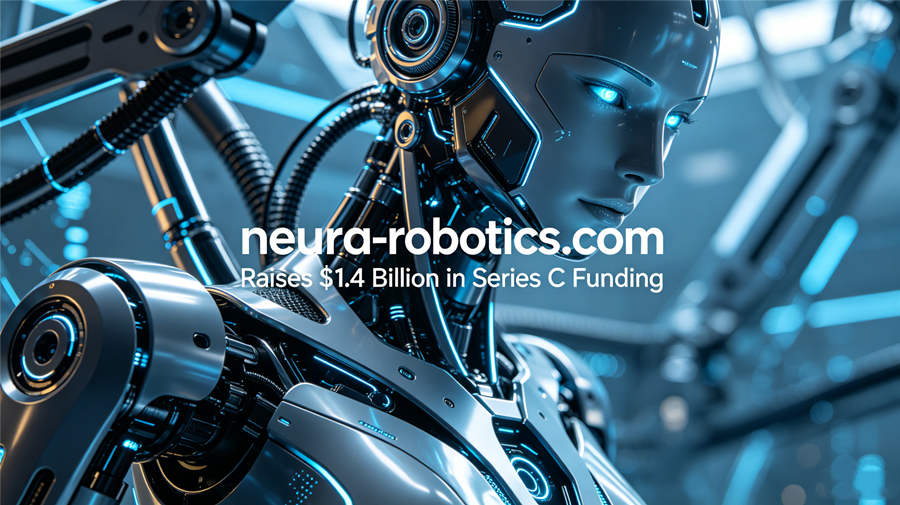

This funding round was a veritable feast of industry giants, attracting top-tier investors including chip giant Nvidia, tech leader Amazon, chip designer Qualcomm, and European industrial giant Bosch. This not only recognizes Neura’s technology but also represents a significant bet on the commercialization prospects of “physical AI.” It’s worth noting that the funding amount includes performance-linked clauses, meaning the final amount depends on the company achieving subsequent milestones.
According to sources familiar with the matter, following this round of funding, Neura Robotics’ valuation has reached approximately $7 billion (approximately RMB 50 billion). Just five months ago (January 2025), when the company completed its €120 million Series B funding round, its valuation was only close to $1 billion (approximately €120 million). In just six months, its valuation has surged sevenfold, reflecting the capital market’s fervor for the cognitive robotics sector.
Looking back at its funding history, Neura’s growth trajectory is traceable: founded in 2019, the company initially focused on cognitive collaborative robots. Before this Series C funding round, its individual funding amounts remained in the tens of millions to hundreds of millions of dollars, such as the approximately $70 million raised in its Series A and A+ rounds in 2023, and the $120 million Series B round led by Lingotto in early 2025. With the launch of its humanoid robot prototype 4NE-1 and the surge in orders, Neura quickly transitioned from a “technological breakthrough” to a “darling of investors.” This latest funding will primarily be used to advance the global deployment of humanoid robots and the research and development of next-generation AI systems.
The article comes from the Internet. If there is any infringement, please notify me to delete it. Please indicate the source when reprinting!
If you have news to publish, please send it to:article@domain.news


